

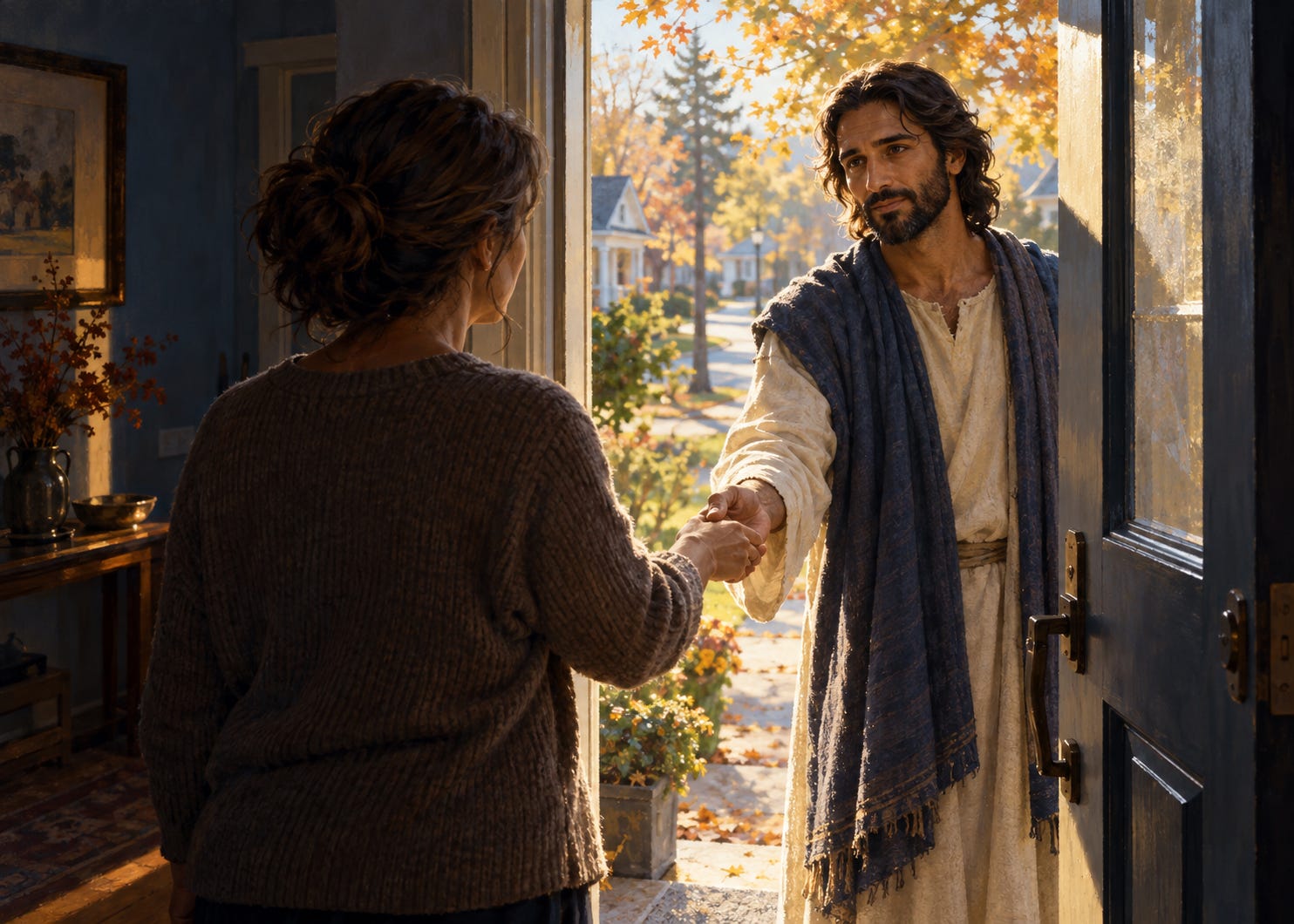
Christ meets us in the life we already have.
Keep Message From the Margins Going in 2027
I feel like I can tell you straight: I want this ministry to continue into 2027, and I need your help to make that happen. We have a lot more work to do together, bringing the Gospel to people who have heard Christianity reduced to prosperity gobbledygook or Christian nationalist heresy. Jesus of Nazareth proclaimed good news rooted in love and mercy. I want us to keep helping people hear it and live it.
That work includes these reflections, our Scripture studies, and the podcast. It also includes things I don’t talk about very often. We’ve given away thousands of dollars to good causes, including the Wounded Warrior Project and the Ray Pfeifer Foundation. We’ve contributed to fundraisers for medical care and final expenses, and made and distributed blessing bags to people experiencing homelessness.
I’m grateful that we’ve been able to do that. I also know I cannot sustain this ministry alone. Reader support pays for the time and resources this work requires, and helps keep nearly everything here available to people who cannot afford to contribute.
If this ministry has helped you pray, understand Scripture, or find your way back toward Christ, would you become a Supporting Member today?
As a thank-you, you’ll receive immediate access to Father Rich’s ebook library: six books, including How to Pray When You Don’t Know What to Say, Faith After Church Hurt, and Faith in the Fire. These books offer practical help with prayer, rebuilding trust after church hurt, and remaining faithful through difficulty.
If money is tight, please keep reading without guilt. I’m grateful for your prayers, comments, and shares. If you do have room to help financially, I’m asking you plainly: please help me carry this work into 2027. We are doing tremendously good work together. Let’s keep it going!
Your Brother in Christ,

What Are We Waiting For?
Jesus said the Kingdom of God was at hand. What would happen if we began living that way?
If you’ve been reading here for a while, you could probably guess this already: I worry a lot about people. It’s a New York Italian trait, and I’m not ashamed to admit it.
People make certain assumptions about a pastor they’ve placed on the liberal end of things. I would happily retire the designation, but we do love our pigeonholes, and somebody has already printed my nameplate. For some folks, it means I believe Christianity is a never-ending parade of rainbow flags and liturgical puppets, and everybody goes to heaven regardless of how they live. Then we all spend eternity drinking skinny margaritas and Frappuccinos with Woodstock Jesus.
While I hope, hope, hope that everyone gets to heaven, I cannot honestly tell you that I’m certain everyone will. I worry about people who think knowing the name of Jesus gets you in, as though it were the password to the speakeasy of the Lord. I worry about people who can excuse themselves from every demand of their faith, and people who never miss church while leading objectively dirtbag lives. Some of them are pastors themselves. A collar does not exempt its wearer from the Gospel.
But my concern reaches beyond what happens when we die. I worry about the life with God we keep postponing while we assume everything will get sorted out at the end. Jesus has something to say about what can begin today.
The Kingdom Is at Hand
Near the beginning of Mark’s Gospel, Jesus comes into Galilee and announces:
“The time is fulfilled, and the kingdom of God is at hand; repent, and believe in the gospel.”
Mark 1:15, RSV2CE
The announcement and the response belong together. God’s Kingdom has drawn near, and Jesus calls His hearers to turn toward Him and believe. Repentance belongs here to an announcement of good news, though some of us have heard the word so often from people who seemed delighted to find fault that we brace ourselves whenever it appears.
Matthew usually calls this the Kingdom of Heaven, while Mark and Luke characteristically speak of the Kingdom of God. Matthew himself uses both expressions in consecutive verses, in Matthew 19:23–24. They refer to the same divine reign. The word “heaven” can send our minds straight to life after death, but Jesus’ announcement concerns God exercising His authority within the world His hearers inhabit.
Keep reading in Mark, and you can watch it unfold. After calling fishermen to follow Him, Jesus frees a man from an unclean spirit in the synagogue at Capernaum. From there He goes to Simon’s house, where Simon’s mother-in-law lies sick with a fever. He takes her by the hand and helps her up; by evening, people are bringing the sick to the door.
Before the chapter ends, a man with leprosy approaches Him. Jesus touches and heals him, then sends him to the priest so that he can follow the process of being restored to the community. For a man whose disease has excluded him from ordinary life with others, that restoration reaches beyond his skin.
All of that is in the first chapter. God’s reign has entered a household’s illness and a man’s exclusion. Its fullness still lies ahead: Jesus’ seed imagery in Mark 4 gives us a way to understand a Kingdom already growing toward a harvest yet to come. We await the defeat of death and the healing of creation, while receiving the life with God that Jesus makes possible now.
A Procrastinated Kingdom
If this life with God is already open to us, we ought to ask why we keep assigning it to a future version of ourselves. That person will finally give faith the attention it deserves, once there is more time, fewer obligations, and substantially less irritation with everybody else.
Meanwhile, the life we actually have keeps moving. “The kids are so busy with soccer and ballet that there just isn’t room for church or Sunday school. But Jesus knows we love Him.” Yes, He does. I do wonder what the children are learning about where that love belongs in the family’s life.
Illness, work, caregiving, and finding a safe church can create real obstacles. But when the habit is to give God whatever room remains after everything else has been scheduled, we ought to examine the schedule. Children learn what we treasure by watching what we consistently give time to.
And the postponement reaches well beyond church attendance. We know there is an apology we owe, but we would prefer the other person to go first. We recognize a resentment that is shaping how we treat someone, but we keep finding reasons to preserve it. We intend to pray once life settles down, without noticing how many unsettled years have already passed.
In The Divine Conspiracy, Dallas Willard describes discipleship as learning from Jesus how to live. That learning requires us to bring Him the life we have, including the habits we have been defending. If we keep insisting that we will be ready later, those habits continue forming us in the meantime.
The Discipleship That Happens in the Dark
Some of those habits thrive where nobody outside our circle can see them. After the door closes, among friends who know our frustrations, we may say things we would never say publicly. The person we are discussing is absent, and somehow that absence begins to feel like permission.
I will raise my hand here. I sometimes fall into this trap, and I would very much like not to.
We need people with whom we can speak honestly about hurt and difficult relationships. But somewhere in the telling, an account of what happened can become an exercise in enjoying someone else’s humiliation. We add what makes the story more entertaining, rehearse the worst interpretation of their motives, and stop remembering that it is an interpretation at all.
Matthew gives us an uncomfortable examination of this inner life. In the Sermon on the Mount, Jesus takes the commandment against murder and addresses anger and contempt; He takes the commandment against adultery and addresses lust in the heart. Our responsibility reaches into what we choose to cultivate before it becomes an outward act. Earlier in that sermon, He says:
“Blessed are the pure in heart, for they shall see God.”
Matthew 5:8, RSV2CE
An unwanted thought crossing our minds is different from choosing to welcome it and build a case around it. We cannot prevent every ugly thought from appearing, but we can notice which ones we keep feeding. If a certain person’s name reliably produces ten minutes of mockery among our friends, and we are always happy to contribute, we have begun practicing contempt.
For me, repentance may require stopping a story halfway through and admitting that I have been unfair. It also reaches the screen in my hand. When the algorithm serves me videos that dehumanize a person or a whole group of people, or treat children of God as objects for our entertainment, I need to stop scrolling long enough to ask what I am enjoying.
The person being discussed or displayed still belongs to God. When I turn from that conversation or screen to prayer, I am asking Him to accomplish His will in a life that includes what I have just been doing. I cannot pray for His Kingdom to come while reserving the right to govern those parts of myself entirely on my own terms.
What If We’re Afraid?
Allowing Him to question us there can be frightening. We might fear the cost of change, wonder whether we have understood Jesus rightly, or worry about what others will think. Some relationships depend on our continuing to behave as we always have, and we may be afraid of what will happen when we stop.
Yet we have already seen how Jesus exercises His authority. The woman He takes by the hand rises from her sickbed; the man He touches can begin returning to his community. We can bring Him the truth about ourselves with hope, even when His work in us requires giving up something we have been defending.
That work happens through a life with Him: prayer, worship, listening to Scripture, and the practice of responding to His grace. We return after failure, receive forgiveness, and try again among people who help us remain faithful. You do not have to resolve every weakness before approaching Him. You can begin by telling Him where you are struggling and asking for help.
I cannot resolve every fear for you. I can only tell you my own story and what I have observed.
I have been freed from so much of the nonsense of our times. Things that once seemed terribly important have lost their hold on me. I have received spiritual treasure worth ten times anything I have given up, and a connection to humanity that has made other people’s lives feel more closely bound to my own.
I have hope that exceeds my understanding, even on the days when I worry, grow tired, or feel unequal to what following Christ asks of me. Beneath those difficulties there is a joy that has become the prevailing truth of my life. I can recognize grace in a change that costs me something because I can also see the freedom it is making possible.
This life with Him has enabled me to help others rather than spend my life asking what I can take. I have seen miracles. I have been given miracles. I sleep soundly knowing that the Master watches over me, and that the spiritual treasure He has given me cannot be taken away by someone else’s judgment or rejection.
My life has meaning and purpose. The grace of God has made a straight path toward the man I have always wanted to be. I still have walking to do, but I can recognize where He is leading me. And the things I have left behind? I rarely think of them, so great is my joy in what I have received.
In Luke 4, Jesus reads from Isaiah about good news for the poor, release for captives, restored sight, freedom for the oppressed, and the Lord’s acceptable year. Then He tells the people listening:
“Today this scripture has been fulfilled in your hearing.”
Luke 4:21, RSV2CE
In my own life, I recognize the fruits of His mission. I have heard the good news and been set free from things that held me captive. My sight has been restored in ways that allow me to see God, my neighbors, and my own life differently. Through His grace, I am truly living in an age of favor.
This is why I want you to begin. I still hope, hope, hope that we will share the joy of heaven, but I also want you to receive the freedom Christ offers within the life you have today. Before putting this away, you can tell Him what you have been reluctant to surrender and ask Him to help you. You can trust Him with the truth.
The Kingdom of God is at hand. What are we waiting for?
A Prayer
Lord Jesus,
You know the excuses I reach for and the fears beneath them.
Help me trust You enough to tell You the truth.
Where I have been cruel, teach me to repair the harm.
Where I have been afraid, help me take the next faithful step.
Give me courage to surrender the habits that keep me from loving,
and humility to receive Your mercy when I fail.
Stay with me as I learn to follow You.
May Your Kingdom come,
and Your will be done,
in the life You have entrusted to me.
Amen.
And Now It’s Your Turn
Has following Christ helped you leave behind something you once thought you couldn’t live without? What did you discover on the other side?
If someone you love has been waiting for life to settle down before returning to their faith, consider sharing this reflection with them.
Help Keep This Ministry Going
The support readers have already given has made it possible to keep developing this ministry. Now I’m working toward enough dependable support to sustain the reflections, Scripture studies, and podcast for the years ahead. If this work helps you follow Christ and you have room in your budget, I would be grateful if you became a Supporting Member today.
Membership also gives you access to our six-book ebook library, including How to Pray When You Don’t Know What to Say and Faith After Church Hurt. They offer help for the life of faith we’ve been talking about here. If a subscription isn’t possible, your prayers, comments, and sharing remain welcome contributions. Thank you for helping this work reach the people who need it.