

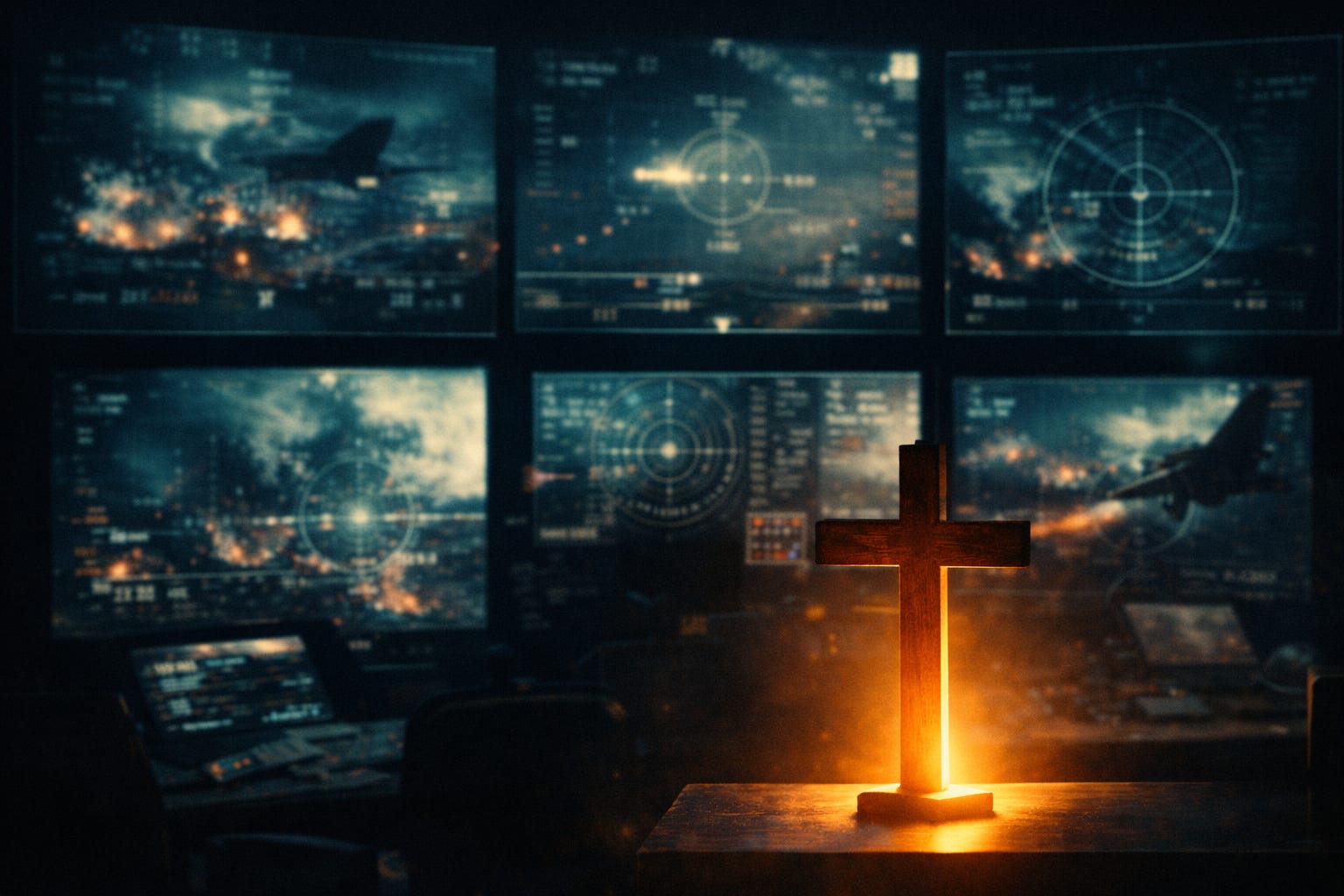
Gunfire.
Explosions.
A warship sinks beneath the waves.
A Fighter jets screams across the sky at impossible speed.
The music underneath, designed to make your pulse quicken.
Your heart starts beating faster.
Adrenaline starts to pump.
It feels like the opening sequence of a blockbuster video game or a Hollywood action trailer.
Except it isn’t.
It is a video released by the White House to promote military confrontation with Iran.
That is what made so many people stop mid-scroll this week.
War was not presented with the sober gravity one expects when nations speak about armed conflict. Instead, it was packaged in the visual language of entertainment, edited with the pacing and adrenaline of a gaming trailer.
And for many viewers, the reaction was immediate.
A quiet, uneasy thought surfaced almost instantly.
Something about this feels wrong.
Because war is not entertainment.
War is not cinematic spectacle.
War is one of the gravest realities human beings can unleash upon one another. It means sons and daughters sent into danger. It means cities shattered, families broken, and lives ended that will never return.
And when war is presented like a video game, something profoundly important is being lost.
Not just seriousness.
Conscience.
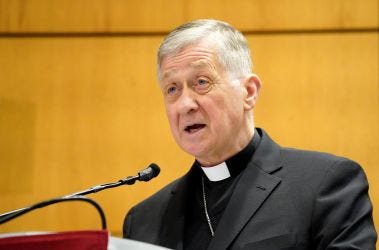
That is why voices within the Church have begun speaking out. Cardinal Blase Cupich recently warned that the merging of warfare, propaganda, and digital spectacle threatens to distort our moral perception of violence itself.
He is right to raise that alarm.
Because when violence becomes spectacle, the Christian conscience must wake up.
And that brings us to the deeper question Christians must ask in moments like this:
What does the Gospel require of us when power begins to market war?
The Gospel Never Glorifies Violence
The Christian tradition has never treated war lightly.
Yes, the Church recognizes that governments sometimes use force to restrain grave evil. That is the tragic reality that thinkers like St. Augustine wrestled with when developing the moral framework later called Just War theory.
But Augustine’s purpose was not to make war easier.
It was to make it harder.
War could only be justified under the most restrictive moral conditions, and even then it remained a tragic failure of human peace.
The goal was always restraint.
Because the Gospel itself points us in a different direction.
Jesus said:
“Blessed are the peacemakers, for they will be called children of God.”
— Matthew 5:9 (NIV)
And the Apostle Paul wrote:
“Do not repay anyone evil for evil. Be careful to do what is right in the eyes of everyone.”
— Romans 12:17 (NIV)
Christians understand something the modern world easily forgets.
War may sometimes be necessary.
But it is never glorious.
The moment violence becomes entertainment, the moral framework that restrains it begins to collapse.
The Church Is Warning Us Right Now
This concern is not theoretical.
The Church is speaking about it in real time.
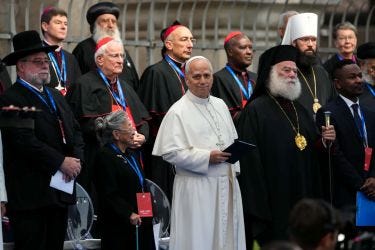
Just recently, Pope Leo addressed an interreligious gathering for peace in Rome and spoke with unusual clarity about the moral gravity of war. Standing alongside leaders from many of the world’s religions, he issued a direct appeal to the conscience of humanity.
“The world is thirsting for peace,” he said. “We need a true era of reconciliation that puts an end to displays of force and abuse of power… Enough of war, with all the pain it causes through death, destruction and exile.”
“War is never holy; only peace is holy because it is willed by God!”
This statement is deeply important,
Because it reminds us that the Christian tradition has never celebrated war as spectacle. The Church has always insisted that violence carries a terrible human cost.
The Pope went even further, reminding the gathered religious leaders that prayer itself is not a performance or a slogan but a spiritual force that can shape history when hearts turn toward reconciliation.
In other words, the Church is calling the world back to moral seriousness.
Not propaganda.
Not spectacle.
Not adrenaline.
But conscience.
And this is exactly why Christians must be cautious when the language of war begins to resemble the language of entertainment.
Because once violence becomes exciting, the human heart begins to forget what violence actually is.
The Cross Stands Against the Spectacle of Power
Lent reminds us of something uncomfortable but essential.
The Son of God was killed by the machinery of state violence.
The Roman Empire believed it was maintaining order.
The crowds treated the crucifixion as a public spectacle.
Soldiers gambled for Jesus’ clothing while He died.
The Gospel records the moment with devastating simplicity:
“They crucified him there.”
— Luke 23:33 (NIV)
No cinematic music.
No heroic framing.
Just the brutal truth of what power does when conscience disappears.
The early Christians never forgot that lesson.
That is why Lent emerged in the ancient Church as a season of deep moral examination. Catechumens preparing for baptism were asked to scrutinize their loyalties. Believers were called to confront the subtle ways the culture around them had shaped their thinking.
Who do we trust?
What narratives about power have we absorbed?
Where have we allowed our hearts to grow numb?
The Desert Fathers warned constantly about acedia, a spiritual dullness that creeps in when the soul stops paying attention to reality.
Our digital culture makes that danger exponentially worse.
War appears in the same feed as advertisements.
Human suffering becomes another scrollable piece of content.
And slowly, quietly, the soul begins to lose its ability to feel the weight of things.
Lent Interrupts the Noise
The Church created Lent precisely for moments like this.
Long before smartphones, long before propaganda videos, Christians understood that the human heart must regularly be retrained to see clearly again.
So the Church prescribed practices that slow the soul down.
Fasting.
Silence.
Prayer.
Almsgiving.
Scripture.
These disciplines were never meant to be religious decorations. They are spiritual medicine.
They detox the soul from the noise of the surrounding culture.
And right now, the surrounding culture is very loud.
The digital world rewards spectacle. Outrage travels faster than reflection. Governments, media companies, and influencers all compete for attention.
But Lent reminds us that disciples of Jesus do not live according to the rhythms of the algorithm.
We live according to the rhythms of the Kingdom of God.
A Christian Posture in a Time of Escalation
So how should Christians respond when war rhetoric and spectacle collide?
First, guard your heart from hatred.
Anger is contagious in moments like this. But Christ never permits us to dehumanize our enemies.
Second, refuse the idolatry of political power.
No nation, no administration, no ideology deserves ultimate loyalty. Only Christ is Lord.
Third, practice attention.
Consider limiting exposure to the endless churn of war commentary. The outrage economy feeds anxiety but rarely produces wisdom.
Fourth, pray for leaders.
Even when we disagree deeply with them.
Scripture commands it:
“I urge, then, first of all, that petitions, prayers, intercession and thanksgiving be made for all people—for kings and all those in authority.”
— 1 Timothy 2:1–2 (NIV)
And finally, lean into the disciplines of Lent.
Silence restores perspective.
Fasting loosens our grip on comfort.
Prayer reminds us that history ultimately belongs to God.
If you have not yet downloaded our Lenten Guide, it includes the full itinerary for our digital worship opportunities and deeper formation resources for this season.
Because Lent is not about religious performance.
It is about returning to reality.
The Church Has Seen Empires Before
The modern world often acts as if our moment of chaos is unprecedented.
It is not.
The Church has lived through violent empires, propaganda campaigns, political upheaval, and wars far more devastating than anything we see today.
Through all of it, one truth has remained unchanged.
Christ is still Lord.
The Cross still stands.
And the conscience of the Church must never surrender its ability to name truth when power forgets its limits.
Prayer
Lord Jesus Christ,
Prince of Peace and Lord of history,
We come before You in a world filled with noise, fear, and the spectacle of power.
Forgive us for the ways we have allowed violence to become distant to us.
Forgive us for the moments when suffering became something we scrolled past rather than something we carried in prayer.
We pray for the leaders of every nation.
Grant them wisdom, restraint, and humility.
Guard them from pride, from recklessness, and from the temptation to treat war lightly.
We pray for soldiers and civilians alike.
Protect the innocent.
Comfort those who mourn.
Strengthen those who carry the heavy burden of conflict.
During this holy season of Lent, purify our hearts.
Free us from the illusions of power and spectacle.
Teach us again the way of the Cross.
Make us people who love peace, pursue truth, and walk humbly with our God.
Through Christ our Lord.
Amen.
A quick note before we close. I chose not to share the video here because I did not want to add to its circulation. Many of you may have already seen it. If you have, how did it sit with you? What did it stir in your conscience? And where does your Christian faith lead you as you reflect on it? I would truly value hearing from you. Please leave a comment and share your thoughts.