


Introduction
Picture a crowded auditorium filled with young people, banners waving, neon lights casting long shadows. The energy is electric. The rhetoric is crisp. And then a voice from the crowd barks: “How can you represent 64 percent Christian Ohio if you are not Christian?”
That happened at a Turning Point USA event. The candidate, Vivek Ramaswamy, was asked why, as a Hindu, he “dares” to run for office in a country that’s “built on Christianity.” One student asked why he “masquerades as a Christian.” Another insisted Christianity is “the one truth” and implied he doesn’t belong in that political space. (newrepublic.com)
I imagine in that moment, Ramaswamy felt a kind of spiritual loneliness… isolated not merely because of his faith, but by the very people claiming to act in Christ’s name.
These questions weren’t modest curiosities. They were accusations. Xenophobic. Racist. The kind of religious hostility that says: “You don’t belong here. This land and this faith is ours, and you are the interloper.”
We must lean into this moment, not deny it. What does it say when Christian nationalism demands uniform belief, even of those who stand under our flag? What does it say when faith is used to exclude rather than to unify?
This isn’t only political theater. It’s a wound in the Body of Christ. And we need to reckon with that, now, before it spreads.
The Fire Doesn’t Destroy You, It Reveals You
When life burns everything down, what remains is faith. Father Rich’s new E-Book, Faith in the Fire helps you find purpose in the pain and strength in surrender. The flames may change you, but they cannot consume what’s eternal within you.
➡ Read Faith in the Fire today.
Reflection
Jesus spent time with outsiders, tax collectors, Samaritans, lepers, the woman at the well. He refused to allow faith to become a prison. He said, “Whoever does the will of my Father is my brother, my sister, my mother” (Mark 3:35). The marker of belonging is obedience to love, not signed allegiance to a man-made faith test.
When 1 John warns, “If someone says, ‘I love God,’ and hates his brother or sister, he is a liar” (1 John 4:20), it is a direct repudiation of what we saw in that Ohio event. To love God is to love the neighbor, precisely the one who differs from me. The Christian nationalism that demands cultural and religious conformity is formless idol worship, dressed in a cross.
I confess: when I read about that crowd demanding uniform Christianity, my heart trembled. I wonder, at times, whether I, our churches, have been complicit in teaching a faith that’s too comfortable, too cozy with power. Have we let fear masquerade as devotion? Have we let identity politics creep into the altar’s shadow?
Because what we saw in that auditorium wasn’t zeal for Christ. It was zeal for control. It was a mob claiming moral authority while wielding exclusion. The irony is, they claimed to conserve heritage, yet they trample the very dignity the Gospel proclaims for every human being.
The cross is not a badge of dominance. It is a sign of weakness, a call to suffer with, a covenant with humility. The cross does not exclude; it embraces. We’re called to carry it, not to erect barriers around it.
Faith That Draws, Not Drives Away
We are meant to draw people to Christ, not drive them from Him. The way we live, speak, and love should make others curious about the peace and joy we’ve found in God. The early Church didn’t grow because of coercion or argument, but because people saw something radiant in those first Christians, something different, something beautiful.
Jesus never mocked the lost or humiliated the curious. He healed, fed, and comforted. He drew people by compassion and truth. When He did challenge others publicly, it wasn’t the seekers or the doubters, it was the religious elite who had turned faith into a fortress.
If our words don’t echo the kindness of Christ, then they don’t echo Christ at all. The Gospel spreads best when people see our love, not when they hear our scorn. As Jesus said, “Let your light shine before others, that they may see your good works and glorify your Father in heaven” (Matthew 5:16).
That light, our example, must outshine the noise. The more we embody joy, forgiveness, and mercy, the less appealing the false gospel of nationalism becomes.
Call to Faithful Action
Let us teach our young people that Christian identity is not a coronet, it’s a calling. Teach them to see the neighbor, not the “other.” Let us call out religious bigotry when we see it, even when it hides behind familiar language.
When “Christian values” becomes shorthand for exclusion, resist it. Don’t merely oppose something, embody something better. Embody the cruciform way: love that is costly, generous, and radical in its welcome.
Closing Prayer
God of abundant mercy,
We come before you unsettled, wounded by divisions too long tolerated. Remind us again: your kingdom is not marked by walls, but by wide-open spaces of grace.
Grant courage to those who stand attacked for their faith, for their difference. Let them know we are with them… not in theory, but in practice. Heal the hearts of those who demand uniformity in your name. Help them to see that true faith does not fear difference; it welcomes it.
Let the scent of Christ cling to our lives not because we dominate, but because we serve… especially the forgotten, the foreign, the one deemed outside. May we bear your love into places of hostility and confusion. May our words soften hardened hearts. May our presence dismantle walls of suspicion.
And may we always remember: you preached the last shall be first, you sat with outcasts, you touched the leper. So send us now, fragile and flawed, but yours. May we walk humbly, speak truth, love recklessly, and bear witness to your Gospel of mercy.
In the name of Jesus, who knew the pain of exclusion and yet never refused a hand to the lost, we pray. Amen.
✨ Faith in the Fire — A Book for This Moment
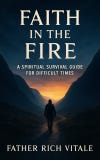
If the world feels heavy right now… if your faith has been shaken by cruelty, hypocrisy, or exhaustion… you’re not alone. Many of us are trying to hold onto our belief in a loving God while watching the world burn around us.
That’s why I wrote Faith in the Fire. It isn’t a book of easy answers. It’s a companion for the days when belief feels fragile and hope feels far away.
Written especially for this community, Faith in the Fire was born out of hundreds of conversations with people like you—good-hearted, faithful souls who love Jesus but struggle to recognize Him in the noise of modern Christianity. It’s for those who’ve been wounded by the Church, betrayed by leaders, or wearied by a faith that feels more political than spiritual.
Inside, you’ll find reflections, prayers, and honest encouragement to help you rediscover your grounding in God’s love… even when everything else is burning. It’s an invitation to rekindle your faith, not by denying the darkness, but by learning to carry light through it.
If you’ve been longing for something to help you feel connected, hopeful, and seen again—this is for you.
👉 Get your copy of Faith in the Fire and receive five additional bonus e-books when you subscribe today.
Together, we’ll learn how to keep the flame alive.