

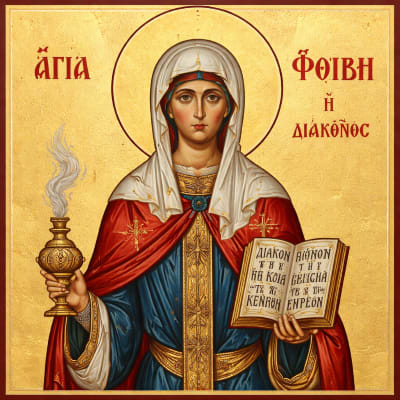
On December 4th, the Roman Catholic Church took a step that felt, to many, painfully familiar.
A Vatican-appointed commission studying the possibility of ordaining women to the diaconate announced that it would not move forward with women deacons at this time. The headline moved fast. The disappointment moved faster.
For many women, and for many who love the Church but feel sidelined by it, the news landed as yet another reminder of exclusion. Another “not yet.” Another moment when hope felt deferred.
But as with so many things in the life of the Church, the truth lives in the details.
This was not a definitive doctrinal declaration. It was not the final word. The commission itself acknowledged that the historical and theological evidence does not allow for a conclusive judgment on the question. The door, while not thrown open, was also not sealed shut.
It is cracked.
And in the life of the Church, cracks matter.
Why this decision feels so heavy
The pain surrounding this issue isn’t abstract. It’s personal.
Women have always been the backbone of the Church. They teach. They serve. They pray. They care for the sick. They hold communities together. And yet, when it comes to visible, sacramental leadership, they are so often told to remain just outside the frame.
For many, this decision feels less like theological caution and more like another missed opportunity to say, clearly and courageously, we see you.
That grief deserves to be named.
A quieter truth from Scripture and history
One of the reasons this conversation refuses to go away is because Scripture and history simply won’t let it rest.
Saint Paul names Phoebe as a diakonos of the Church. That word matters. It is the same word we translate as “deacon.” Beyond Scripture, the early Church bears witness to women serving as deaconesses in various regions. We have art. We have liturgical references. We have written accounts of women ministering, teaching, safeguarding dignity, and serving where male clergy could not.
Were these roles identical to the modern diaconate? No. But neither were bishops or priests at that stage. The Church’s structures developed over time in response to pastoral need and the movement of the Holy Spirit.
Development is not betrayal. It is how the Church has always lived.
Orders are not frozen in time
Neither Jesus nor the Holy Spirit handed the Church a completed organizational chart.
At Pentecost, the Spirit transformed the Apostles. What we now call the episcopacy emerged from that moment. The diaconate developed to meet concrete needs. The presbyterate followed as the Church grew and spread.
Even today, the Church acknowledges development. The permanent diaconate itself was restored only in the modern era after centuries of dormancy.
If structures have changed before in service of the Gospel, the honest question is not can they change… but when courage will allow them to.
The pastoral cost of exclusion
It is impossible to ignore the broader context.
Would the culture of secrecy, abuse, and cover-up that has wounded so many have unfolded the same way if women had been present in positions of real authority? We cannot know for certain, but it is hard to imagine that the absence of women’s voices helped.
Beyond that, there is the quieter cost. How many women have drifted away because they never saw themselves reflected at the altar? How many vocations were silenced before they were even spoken aloud?
The Church does not lose holiness by including women. In my opinion, it loses some of the richness that could be by excluding them.
Poetry is not enough
Much of the resistance to women in ordained ministry leans heavily on metaphor.
“The Church is female, therefore priests must be male.”
It is poetic language, yes. But poetry alone cannot carry the weight of exclusion. Especially when the lived reality of women’s bodies, women’s labor, women’s forgiveness, and women’s sacrificial love already mirror so much of what priestly ministry claims to signify.
Perhaps the Metaphor has taken on a shape that it doesn’t warrant.
A Gospel-shaped hope
Throughout the Gospels, Jesus consistently reframed religious law when it harmed people. He healed on the Sabbath. He touched the untouchable. He placed mercy at the center.
The Church exists not to preserve first-century cultural assumptions, but to make Christ present to the people of every age.
That work is not finished.
Today’s decision is disappointing. But it is not the end. The door remains open, however narrowly. And history suggests that many of the Church’s most life-giving developments began not with sweeping declarations, but with a crack of light.
My hope is that the Church continues to listen… to Scripture, to history, to the lived experience of women, and to the Spirit who has never stopped moving.
If you haven’t yet watched the video reflection that accompanies this piece, I invite you to do so. Head over to @FatherRichV on any major social platform. And if this stirred something in you, I’d love to hear from you in the comments. These conversations matter, and they shape the Church we are still becoming.
With gratitude for you walking this road with me.
Just a quick note about who I am and where I’m coming from… I am an Old Catholic priest who writes about the Church in its many expressions. While I am sometimes critical of the Roman Catholic Church, as I am at times critical of all Christian communities, that critique should never be read as repudiation or protest. In fact, you will find far more instances of me cheering the RC Church loudly than moments of scrutiny. I hold the Church of Rome in high regard, even though I am not a member of it, and I recognize the depth of faith, tradition, and holiness found within her life. These reflections are offered from my own pastoral conscience and experience. They are my opinions alone, and I do not speak on behalf of the Roman Catholic Church or any other body. I encourage every reader to seek and remain rooted in a church home where they can grow in faith, love, and service. If you ever wish to discuss this, my inbox and my heart is always open.