

Friends,
I want to briefly acknowledge a pause in this space.
Over the last few weeks, life did what life tends to do from time to time… it arrived with its own agenda. I’ve been navigating a season of transition behind the scenes, and like most people, I needed to give my attention to the work of landing on my feet before returning to the keyboard.
Ministers aren’t immune from the usual mix of love and loss, change and complication. We try to keep steady rhythms of prayer, sacrament, and service, but every now and then even the most faithful routine needs a moment to catch its breath. Thankfully, the Gospel has plenty of room for that.
Jesus himself steps away from the crowds when he needs to. He rests. He prays. He returns. That pattern turns out to be more instructive than any productivity plan.
Christian faith calls us a resurrection people, which doesn’t mean we skip over hard seasons. It means we trust that God is still at work when things feel unsettled, and that new life has a habit of showing up once we’ve stopped insisting everything stay the same.
I’m grateful to be writing again, grateful for the chance to keep building this space, and grateful for your patience along the way. It’s good to be back, and I’m glad we’re here together.
Wishing you every blessing,
Fr. Rich
A Season for Bravery
What the Gospel asks of us when fear feels close at hand.
The world feels heavier than usual right now.
You can sense it in the weight of what passes for normal conversation. In the way headlines arrive faster than we can process the last. There are moments when the news does more than inform us…it unsettles us.
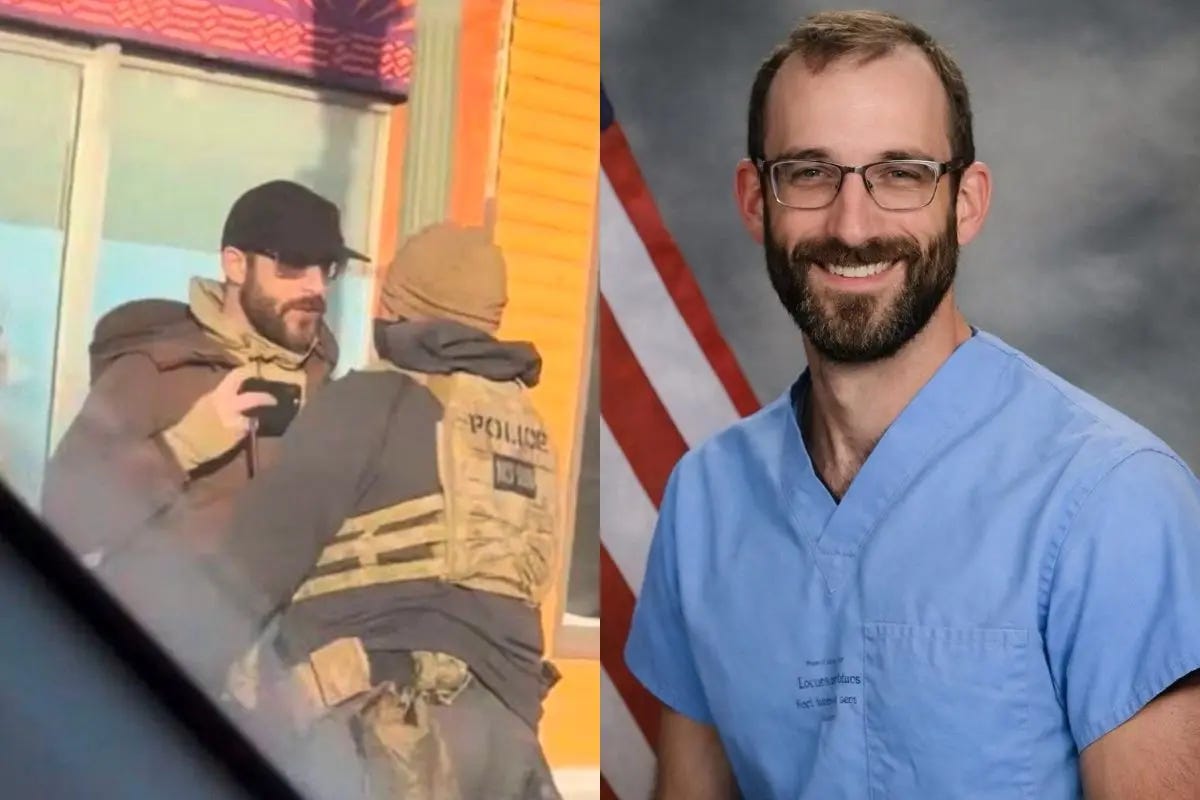
Recently, two American citizens were killed during federal immigration enforcement actions in Minneapolis. Minneapolis resident Renée Nicole Good was fatally shot by a U.S. Immigration and Customs Enforcement agent in early January, and just weeks later ICU nurse Alex Pretti was killed during another encounter with federal agents amidst protests in the same city. The government’s initial explanations for these deaths have been sharply disputed by family members, eyewitnesses, and video evidence, and the contrast between the official narrative and what many saw with their own eyes has intensified public scrutiny and grief.
In the midst of these tragedies, independent journalist Don Lemon was arrested by federal agents after covering protests tied to the unrest, drawing fierce criticism from press freedom advocates who argue that reporting on these events is itself a form of bearing witness
These are not abstract moments. They are real people…real losses…real fears. And they raise the same question many of us carry quietly: What do we do when the world feels threatening and the structures around us feel more hostile than protective?
This is often where faith gets misrepresented. As a comfort blanket…as an escape hatch…as a way to numb ourselves so we don’t have to feel the fear of the world too sharply.
But Christianity has never promised that kind of safety.
Jesus was born under occupation, lived under surveillance, and was executed by the state. The early Christians knew that following the way of love does not render one immune to conflict with power. It often puts you in its path.
What Christianity promises instead is meaning, courage, and a distinctly nonviolent love strong enough to stand upright when the world feels unsteady.
A Gospel That Never Courted Power
When Jesus teaches, “Blessed are those who are persecuted for righteousness’ sake” (Matthew 5:10), he is not romanticizing suffering. He is telling the truth about the cost of following him. This does not refer to hurt feelings, to being disagreed with, to public piety that isn’t appreciated, or to being rebuffed when bloviating about culture war issues. That’s discomfort, not persecution.
Persecution, in the Gospel sense, happens when a person suffers consequences because they have lived the love, mercy, and justice Jesus taught. It happens when compassion threatens indifference, when truth confronts harm, and when solidarity with the vulnerable disrupts systems of power. Jesus is not blessing inconvenience…he is blessing costly love.
When the apostles are ordered to be silent, they reply, “We must obey God rather than men” (Acts 5:29). That is moral clarity, not rebellion for its own sake.
This is why the recent deaths in Minneapolis and the tensions around how they are being remembered demand more than a shallow spiritual response. God does not ask us to bow our heads and turn away from suffering. God asks us to name it, face it, and respond with compassion.
“There Is No Greater Love Than This”
Jesus tells his disciples, “There is no greater love than to lay down one’s life for one’s friends” (John 15:13). That love, lived out in ordinary life, often requires courage that looks nothing like bravado and everything like steadfast generosity.
And so we ask—who are our neighbors?
Not just the ones we agree with, not just the ones whose suffering makes sense to us, not just the ones who fit comfortably within our circles. Our neighbors are the ones whose pain calls us to stop, whose vulnerability interrupts our plans, whose dignity is threatened by systems that are slow to value it.
Laying down one’s life for a neighbor does not always mean physical death. It often means sacrificing comfort, certainty, reputation, or safety to stand with someone who is afraid, marginalized, or suffering.
This is what Christian love looks like when it grows up. Not sentimentality. Not slogans. Courageous love. Sacrificial love. Love that refuses to look away.
Five Ways to Lead With Love and Generosity
-
Refuse dehumanizing language.
Whenever people are reduced to categories or threats, speak their humanity back into the room. -
Practice visible compassion.
Presence matters. Small public acts of kindness preach louder than arguments. -
Tell the truth calmly.
Love does not require silence. It requires clarity without cruelty. -
Protect the vulnerable when you can.
This may look like advocacy, accompaniment, or simply refusing to look away. -
Keep your heart open.
Cynicism feels like wisdom, but it corrodes the soul. Hope is an act of resistance.
Five Spiritual Practices for Hard Seasons
-
Daily grounding prayer.
Even a few minutes of stillness reminds the body and soul that God is near. -
Limit your news intake.
Staying informed is important. Being constantly flooded is not. -
Return to the Gospels often.
Jesus recalibrates us when fear starts to set the agenda. -
Stay connected to real people.
Isolation magnifies anxiety. Community dilutes it. -
Practice Sabbath in some form.
Rest is not avoidance. It is spiritual maintenance.
A Call to Faithful Courage
The Church does not exist to bless power or excuse harm. It exists to proclaim good news to the poor, liberty to the captives, sight to those who are afraid.
We are a resurrection people. Not because we deny suffering, but because we trust that suffering does not get the final word. Love does.
This is a season for bravery rooted in compassion, generosity, and hope. That kind of bravery is still possible.
A Prayer for Bravery
God of courage and compassion,
We bring before you a world that feels afraid and unsettled.
We pray for those who have been harmed, for those whose lives have been cut short, for families who mourn in places most of us will never see.
When fear rises in our hearts, steady us.
When anger tempts us toward cruelty, soften us.
When exhaustion whispers that nothing we do matters, remind us that love is never wasted.
Give us the bravery to tell the truth with kindness,
The strength to stand with those who are vulnerable,
And the humility to remember that we, too, depend on mercy.
Protect our spirits in this season.
Root us in prayer, anchor us in hope,
And make us instruments of your peace in a world desperate for it.
May we live as people who trust that love is stronger than fear,
And that resurrection is always closer than it appears.
Amen.
A Quiet Invitation
If this reflection steadied you, challenged you, or gave language to something you’ve been carrying, I want you to know this work doesn’t happen by accident.
Message from the Margins exists to offer thoughtful, Gospel-rooted reflections in a world that often trades depth for outrage and faith for slogans. I write for people who want a Christianity big enough to face reality honestly, tender enough to hold suffering, and brave enough to tell the truth without cruelty.
The free newsletter will always remain free. But the paid edition allows me to do this work consistently and well… deeper essays, extended theological reflections, prayers for hard seasons, and writing that doesn’t rush past the questions that matter most.
If you’re looking for a faith that doesn’t flinch, a Gospel that still has something to say, and a place where courage and compassion are held together, I’d be honored to have you as a paid subscriber.
Thank you for reading. Thank you for walking alongside me. And thank you for helping this work remain alive.
With gratitude,
Fr. Rich