

Imagine a fourteen-year-old named Alex (names changed). Alex comes to a trusted counselor, carrying shame, confusion, fear. The counselor promises to “help align” Alex’s feelings with what some believe is God’s intention. Over months, Alex is told these desires are sins to be purged, that to be “fixed” is to be faithful. The sessions leave scars more than solace.
Many of you reading today might know someone like Alex — a child, teen, cousin, parishioner — who sat in a room hoping for mercy, and instead found judgment disguised as care. What happens when our laws allow that kind of counseling for minors — or prohibit it? That is the question now before the U.S. Supreme Court.
Christianity was never meant to be cruel. The Message From the Margins shows us how to reclaim Jesus’ radical compassion. Free with 5 bonus e-books to deepen your faith.
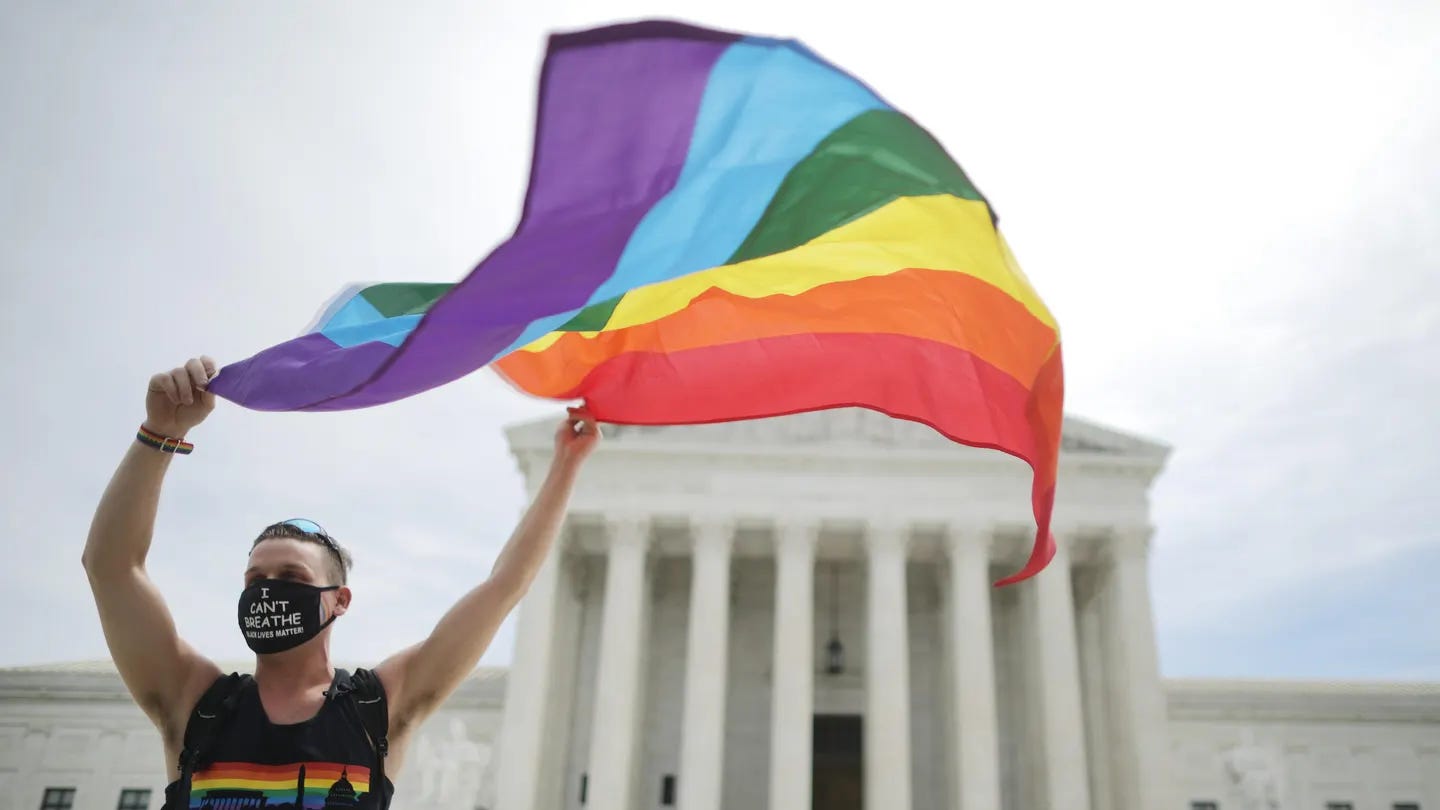
In October 2025 the Court heard arguments in Chiles v. Salazar, a case challenging Colorado’s law forbidding licensed mental-health providers from performing conversion therapy (or “reparative therapy”) on minors. Reuters+3The Washington Post+3Wikipedia+3 The law is under assault as an infringement on free speech and religious liberty. Reuters+2Them+2 The stakes are high: over twenty states already ban similar practices. LGBT Map+2Human Rights Campaign+2 If the Court sides against the bans, many protections could unravel.
We stand at a crossroads of conscience, law, and pastoral care. As a priest, I feel the tension keenly: the desire to protect the vulnerable, to speak truth in love, and to uphold religious freedom. My hope is that we clarify not only what the law should be, but how Christians must respond with integrity and compassion.
Let us step back and reflect on what’s at stake — not only for the courts, but for children, for faith, and for our common humanity.
Reflection
First, let us remember Jesus’ words: “Let the little children come to me, and do not hinder them, for to such belongs the kingdom of heaven” (Matthew 19:14). Children are not instruments to be shaped; they are beloved souls to be nurtured. Any practice that treats them as projects is suspect, especially when it can wound.
The case before the Court asks whether states can regulate licensed professionals who attempt to change a minor’s sexual orientation or gender identity. Supporters of bans argue that conversion therapy is discredited, harmful, and dangerous, especially to minors. Opponents, such as the therapist in Chiles, argue that prohibiting such speech-based counseling violates free speech and favors an “affirmation-only” approach over what some see as sincere religious counsel.
Church teaching calls us to both freedom of conscience and protection of the weak. We cannot say “let everyone speak” if speech becomes a weapon wielded against minors who are psychologically vulnerable. The pastoral calling is to care for the weakest—and minors, in their formation, are especially weak.
I confess: I wrestle here. I’m sympathetic to those who argue for pastoral counseling grounded in faith. But I also know that the history of conversion therapy is littered with brokenness—depression, shame, trauma, even suicidality. The scientific consensus is clear: conversion therapy offers no reliable “cure,” and in many cases, it causes harm. To allow a counselor to tell a child “change your feelings or repent them” under a guise of therapy is dangerously close to spiritual abuse.
I am a big believer in judging a tree by its fruit, just as Jesus taught: “Every good tree bears good fruit, but a bad tree bears bad fruit” (Matthew 7:17). The long-established fruit of conversion therapy is lasting harm, shame, despair, and, in too many cases, the worst possible outcome. There are few, if any, documented stories of those subjected to such treatment going on to live whole, healthy, joy-filled lives. Meanwhile, many former proponents of conversion therapy have publicly recanted their claims, confessing the pain they inflicted. None of these things are of God.
We should ask ourselves: does our faith permit us to impose brokenness on youth in the name of doctrinal purity? Do we truly believe God is calling them to flourish as they are, or are we trying to remake them in our own image? The Christian Gospel is about transformation, but transformation takes time, grace, and accompaniment—not coercion, not quick fixes.
If the Court strikes down these bans, licensed therapists could again offer “change” therapy to minors in many states. That decision would force Christian communities to reclaim the pastoral ground. We must be vigilant: this is not simply a legal question; it is a moral test for our churches, our ethics, our love for the marginalized.
Call to Faithful Action
I urge you, dear reader: speak up. Write to your state representatives. Support local and national groups that protect LGBTQ youth from harmful practices. Provide safe spaces in your parish for youth wrestling with identity, without judgment or coercion. Teach your congregations the difference between accompaniment and imposition.
We must never weaponize faith against those God made. If the law fails, the Church must not. We must bear witness — in word, in care, in bold hospitality — to those whom society discards.
Closing Prayer
O God of all tender mercies, you who called the little ones and held them close, we bring before you those youth who struggle with identity, whose hearts cry out for love and acceptance. Grant them courage and companionship in their journey. Shield them from voices that tell them they must conform before they can stand. Give wisdom to families, ministers, counselors, and judges — that they may protect, not wound; that they may listen, not impose; that they may heal, not harm.
Where laws fail, let your justice prevail in human hearts. Where speech is misused as a weapon, let your voice be heard in mercy. May our communities be sanctuaries of trust, where every child feels dignity and hope. Kindle in us the courage to stand with the vulnerable, to speak truth in love, and to embody your radical inclusion.
We ask this in the name of Jesus Christ, who came for the lost, the broken, the cast-aside. Amen.
Loneliness: The Silent Epidemic
And Five Other Books to Heal, Inspire, and Reconnect Your Spirit

There is a quiet ache spreading across our world… one that few talk about out loud.
It doesn’t make headlines, but it shows up in the empty chair at dinner, the endless scrolling late at night, and the gnawing feeling that we’re somehow disconnected from others, from God, and from our true selves.
That ache is loneliness.
And it has become one of the greatest spiritual epidemics of our time.
A Companion for the Weary Heart
Loneliness: The Silent Epidemic isn’t just another self-help book. It’s a pastoral guide through the wilderness of isolation. In its pages, you’ll find stories, scripture, and spiritual insight woven together with practical ways to rediscover connection—with others, with the Divine, and with the parts of yourself that long to be seen and loved.
You’ll learn:
-
Why loneliness has become so pervasive in our modern age
-
How faith, neuroscience, and community all intersect in the healing process
-
How to rebuild genuine relationships in a world that keeps us busy but disconnected
-
Simple daily practices for spiritual grounding and emotional renewal
It’s not about pretending loneliness doesn’t hurt. It’s about learning to hear what it’s trying to teach us—and finding our way home.
The Complete Message From the Margins Collection
When you order Loneliness: The Silent Epidemic, you’ll also receive five other pastoral e-books, written to help you strengthen your spirit, deepen your faith, and find peace in a restless world.
1. How to Pray When You Don’t Know What to Say
A gentle guide to prayer for real people—those who are tired, distracted, or uncertain whether God is still listening. Learn the deeper meaning of prayer as relationship, not performance.
2. Faith in the Fire
When life falls apart, where is God? This book walks through suffering, loss, and doubt, showing how faith is refined—not destroyed—by the fires of adversity.
3. Reclaiming Jesus: Finding and Living Christ’s True Teachings in a World Where Christianity Feels Lost
A bold invitation to rediscover the radical love and mercy of Jesus of Nazareth, stripped of politics, power, and manipulation.
4. A Survival Guide for Spiritual Burnout
For those who have given so much they have nothing left, this book offers tools for rest, renewal, and reconnection with the Spirit who heals the exhausted soul.
5. 5 Lies Christians Are Told About Themselves
A liberating look at the myths that keep believers small, ashamed, or afraid. It replaces guilt with grace and fear with freedom.
Six Books. One Mission.
To help you rediscover what faith was always meant to be:
A source of healing, not shame.
A path of compassion, not control.
A home for the weary, not a fortress for the fearful.
Whether you’re a lifelong believer, a seeker, or someone who walked away from church long ago, this collection offers a fresh vision of Christianity rooted in love, humility, and truth.
For a Limited Time
Download Loneliness: The Silent Epidemic today and receive all five companion e-books absolutely free.
You’ll gain lifetime access to a growing library of spiritual resources from Message from the Margins, plus updates, reflections, and future bonuses from Father Rich V.
You Don’t Have to Walk Alone
The opposite of loneliness isn’t popularity—it’s belonging.
And belonging begins when someone says, “You’re not alone anymore.”
Let these books be that voice for you.
Download your bundle today and take the first step toward peace, connection, and purpose.