

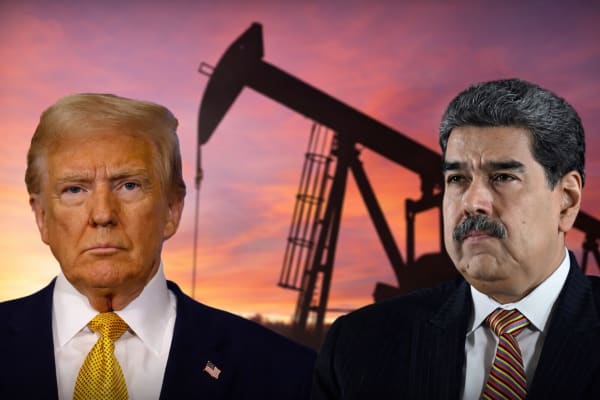
Some days the world feels like it is spinning faster than our hearts can keep up with. You turn on the news, and the words war, explosions, intervention, and casualties seem to echo through the room. It is hard to pray over images like that. It is harder still to know what to think, what to say, or what faithful love looks like in the middle of it.
I have heard from many of you in recent days who feel overwhelmed by the military action unfolding in Venezuela, unsure how to talk about it with friends, unsure how to respond spiritually. Some feel relief that a cruel regime may finally be weakening. Others carry fear for innocent lives, suspicion of power, and concern about the long shadows history casts over intervention.
And many of us, if we are honest, feel both at once.
Whenever the world shakes like this, our first instinct is often to reach for certainty. We want simple heroes and simple villains, a clean moral frame that lets us plant ourselves on solid ground. But life rarely gives us simplicity. Scripture teaches us that human conflict always carries sin, suffering, and the potential for both justice and harm braided tightly together.
So we stand here as Christians, watching a complicated moment unfold in a wounded nation, where people have lived under oppression, scarcity, and fear, and where geopolitical interests mix with moral hopes for liberation. We want to celebrate the possibility of freedom, yet we tremble for every family caught in the cross-current.
If you have found yourself praying and not knowing what to ask for, you are not alone. If you have found yourself angry, hopeful, suspicious, heartbroken, or numb, you are not alone either. The Gospel does not ask us to numb our hearts. It asks us to bring them honestly before God.
And so today, I want to reflect with you, not as pundits or strategists, but as disciples of Jesus trying to remain faithful when the world feels chaotic and morally tangled.
Reflection
In moments like this, I always return to Jesus’ words in the Beatitudes: “Blessed are the peacemakers, for they shall be called children of God” (Matthew 5:9). Notice, he does not say peacekeepers. He says peacemakers, people who labor actively for justice, mercy, and human dignity, even when the world resists it.
Peacemaking does not mean pretending that evil regimes are acceptable, or that the suffering of the oppressed is tolerable. Scripture repeatedly condemns leaders who exploit the poor and devour their people. “Woe to those who decree unjust laws,” the prophet Isaiah writes, “to rob the poor of their rights” (Isaiah 10:1–2). We must be clear about the moral reality of injustice.
At the same time, the Gospel warns us that power, even when used against evil, is capable of becoming destructive if it forgets the humanity of those in its path. Jesus weeps over Jerusalem because he knows that violence, once unleashed, rarely stops where we mean for it to stop. I carry that tension in my own heart, and I suspect you do too.
On a personal level, I will admit this is where I struggle. I want to rejoice for people who may finally glimpse freedom after years of repression, yet I worry for civilians who never asked for bombs or bullets. I want to speak honestly about the sins of dictators, yet I also refuse to baptize violence as righteousness. So I find myself praying, “Lord, teach me how to love your people without losing sight of truth… teach me to lament without losing hope.”
The cross teaches us that God enters into human suffering rather than standing at a distance. Our calling is not to explain everything neatly, but to refuse indifference, to keep our hearts awake to the cries of the living, and to anchor our conscience in Christ, who always stands with the vulnerable first.
Call to Faithful Action
So what do we do now, as Christians watching this unfold?
We pray for the Venezuelan people, especially the poor, the displaced, and the fearful. We advocate for humane treatment of refugees, fair trade, and just reconstruction that lifts people out of exploitation rather than replacing one form of domination with another. We speak clearly against cruelty, corruption, and the idolatry of power, whether it comes from dictators or from the nations that oppose them.
And in our conversations, we choose humility over slogans. We resist the temptation to cheer for violence as if it were a sporting event. We name injustice honestly, but we also remember that every side in any conflict is filled with human beings made in the image of God.
If we can hold compassion and conscience together, then even in a fractured world, we remain faithful to the Gospel.
Closing Prayer
God of mercy and justice,
we lift before you the people of Venezuela, your beloved children who long for freedom, safety, and peace. You know their stories, their hunger, their resilience, and their grief. Stand near to every mother who fears for her child, every elder who feels forgotten, every young person who wonders what tomorrow will bring.
We pray for those who wield power, that their decisions will protect the innocent, restrain the violent, and honor the dignity of every human life. Guard us against indifference, against triumphalism, and against the seduction of easy answers. Give us hearts that are strong enough to tell the truth, and gentle enough to remain compassionate.
Teach us to be peacemakers, not spectators. Let our prayers become acts of solidarity, our words become instruments of hope, and our lives become signs of your Kingdom. When the world feels chaotic and uncertain, anchor us in your love, which no war, no ruler, and no fear can overcome.
We place this nation, and our restless hearts, into your hands. Amen.