

Photo Credit AP
Welcome to Message from the Margins
If you’re new here, I’m glad you found your way in.
My name is Father Rich. I’m an Old Catholic priest coming up on lucky 13 years of Ordination, and this newsletter exists for people who still believe faith should have something honest to say about the world we’re living in.
Every week I look at the headlines through a different lens. Not the shouting matches you see on television, and not the shallow outrage cycles that dominate social media. Instead, we ask a quieter question.
What does the Gospel have to teach us about what’s happening right now?
Sometimes that means talking about immigration and human dignity.
Sometimes it means wrestling with war and moral responsibility.
Sometimes it means looking honestly at how the Church itself is changing.
Most of the time we’re exploring ways to love God, ourselves, and our neighbor better… together.
The stories you’ll find here are not just news updates. They are moments where faith, power, compassion, and courage collide in public life.
And in a time when religion is often used as a political weapon, I believe something better is still possible.
I believe Christianity still has a voice rooted in mercy, justice, humility, and human dignity.
That’s what Message from the Margins is about.
What You’ll Find Here
Subscribers receive:
• thoughtful reflections on faith and current events
• pastoral guidance for navigating a chaotic cultural moment
• commentary on how Christianity intersects with politics, justice, and public life
• spiritual encouragement for people who are trying to live their faith with integrity
This is not a culture-war newsletter.
Nor is it a Church fangirl newsletter.
It’s a place for people who want to think deeply, pray honestly, and engage the world with compassion and courage.
Join the Community
If this kind of conversation resonates with you, I invite you to subscribe.
Most posts are free, and subscribing ensures these reflections show up directly in your inbox.
Paid subscribers help support the work of this ministry and receive deeper reflections, formation pieces, and special series throughout the week. It is a way to grow and strengthen your spiritual life based on time tested practices.
You can subscribe below.
From the bottom of my heart, thank you for being here.
In Christ,

Some weeks, the headlines feel like a pile of unrelated noise.
This is not one of those weeks.
The stories rising to the surface right now have a common thread. They are all asking what faith looks like when power is on the line. They are asking whether religion will comfort the comfortable, or stand near the vulnerable when it becomes inconvenient.
That is one of the enduring questions of Christian public witness. Not whether churches can produce statements, but whether believers, clergy, and leaders can still recognize the image of God in people caught beneath policy, war, and institutional struggle.
Some of the most important stories this week are not really about religion as a private feeling. They are about faith showing up in public, and forcing a moral question that many would rather avoid.
When Clergy Have to Fight for Access to Detained Migrants
What Happened
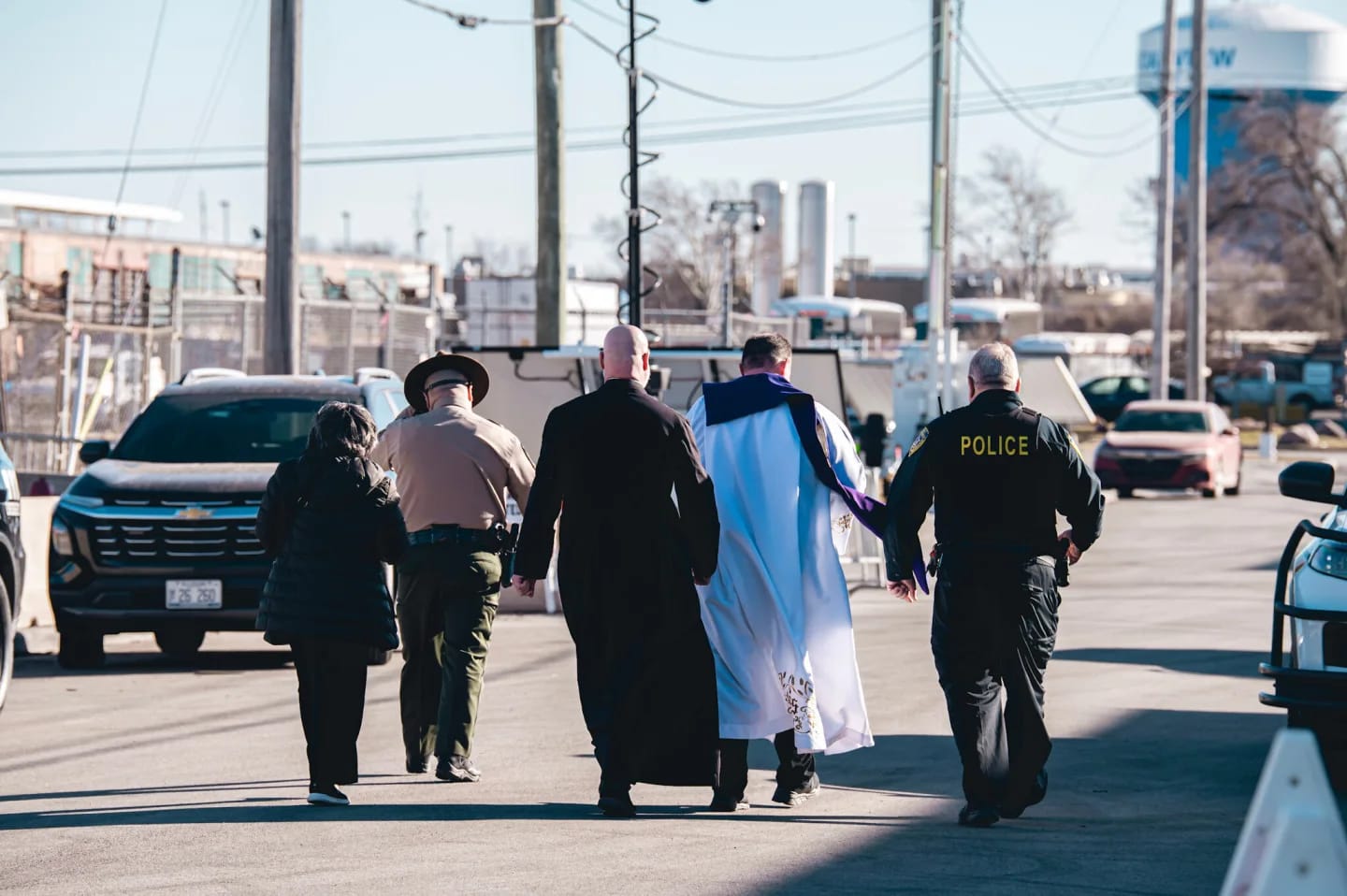
Faith leaders across the United States are pushing for greater access to ICE detention centers during Lent and Ramadan. According to AP reporting, clergy and religious leaders have said detainees are being denied consistent spiritual care, and lawsuits have been filed in places like Illinois and Minnesota after religious access was restricted during enforcement surges.
The same reporting notes that detention numbers have climbed to roughly 75,000, while faith groups argue that worship access, prayer, sacraments, and pastoral presence are basic human needs, not luxuries.
Why It Matters
This is not merely an immigration story. It is a human dignity story.
A society tells the truth about itself by how it treats people who are hidden from public view. When clergy have to go to court in order to pray with the detained, bring ashes, or offer spiritual care, something deeper is being exposed.
We are no longer debating policy alone. We are asking whether people in custody are still being treated as human beings created in the image and likeness of God.
Reflection
The Gospel is painfully clear here.
Jesus did not say, “I was in prison, and you agreed to disagree about the finer points of border management.”
He said, “I was in prison and you visited me.”
The Church does not get to opt out of that because the politics are messy. If a person is frightened, isolated, detained, and cut off from ordinary comfort, that is precisely where pastoral presence belongs.
And if access to prayer has become controversial, then the controversy is not with the Gospel. The controversy is with the hardness of our hearts.
The Church Is Speaking More Bluntly About War
What Happened
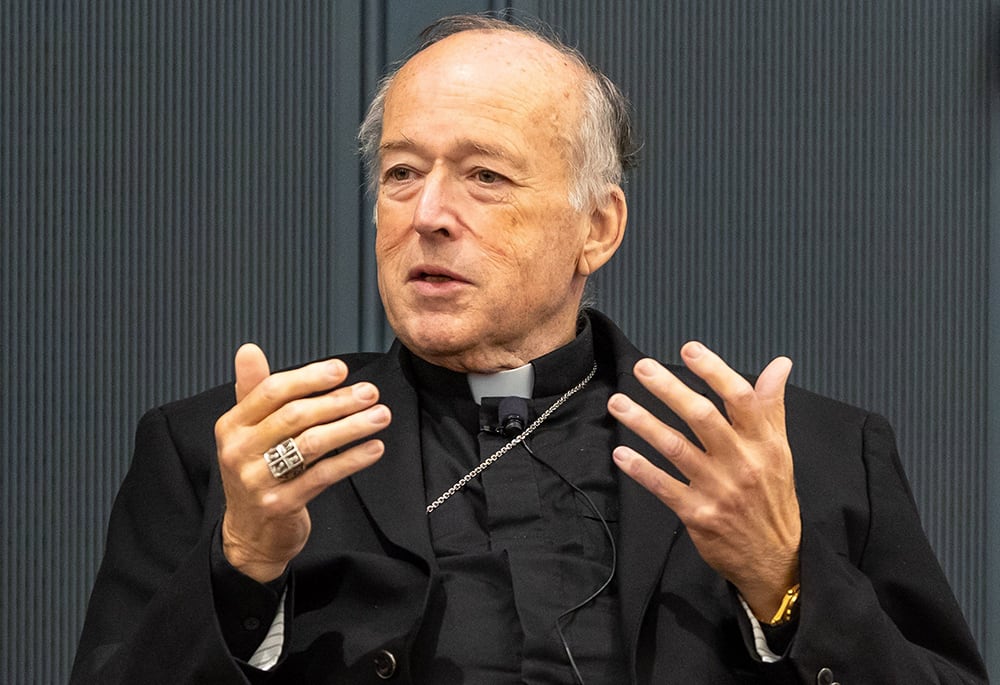
Pope Leo XIV has called for peace and dialogue amid the U.S.–Israeli war in Iran, but two senior American cardinals have gone further in public.
AP reports that Cardinal Robert McElroy argued the war does not meet Catholic just war criteria, while Cardinal Blase Cupich condemned the administration’s treatment of the conflict as though it were entertainment, criticizing social media framing that turned real human suffering into spectacle.
Additional reporting highlighted Cupich’s criticism of action-movie style presentation of strike footage and McElroy’s rejection of the war’s moral legitimacy.
Why It Matters
This matters because the Church’s moral tradition is not decorative.
Catholic teaching on war exists to restrain the human tendency to baptize violence whenever it is politically useful. When bishops and cardinals start saying plainly that a conflict fails just war standards, they are not meddling in partisan politics.
They are doing what Christian leaders are supposed to do, which is to ask whether human life is being treated as sacred or as collateral.
Reflection
One of the great temptations of modern life is distance.
Distance makes it easy to speak casually about destruction. Distance makes death feel theoretical. Distance lets people cheer what they would not bear to watch up close.
The Church’s just war tradition exists in part to interrupt that moral numbness. It forces us to ask not simply whether something can be done, but whether it should be done, and at what cost to the innocent.
Christians should be deeply suspicious any time war is packaged like a product and sold with swagger.
That is not moral seriousness. That is spiritual decay dressed up as strength.
The Vatican’s New Ambassador to Washington Is Not a Minor Story
What Happened
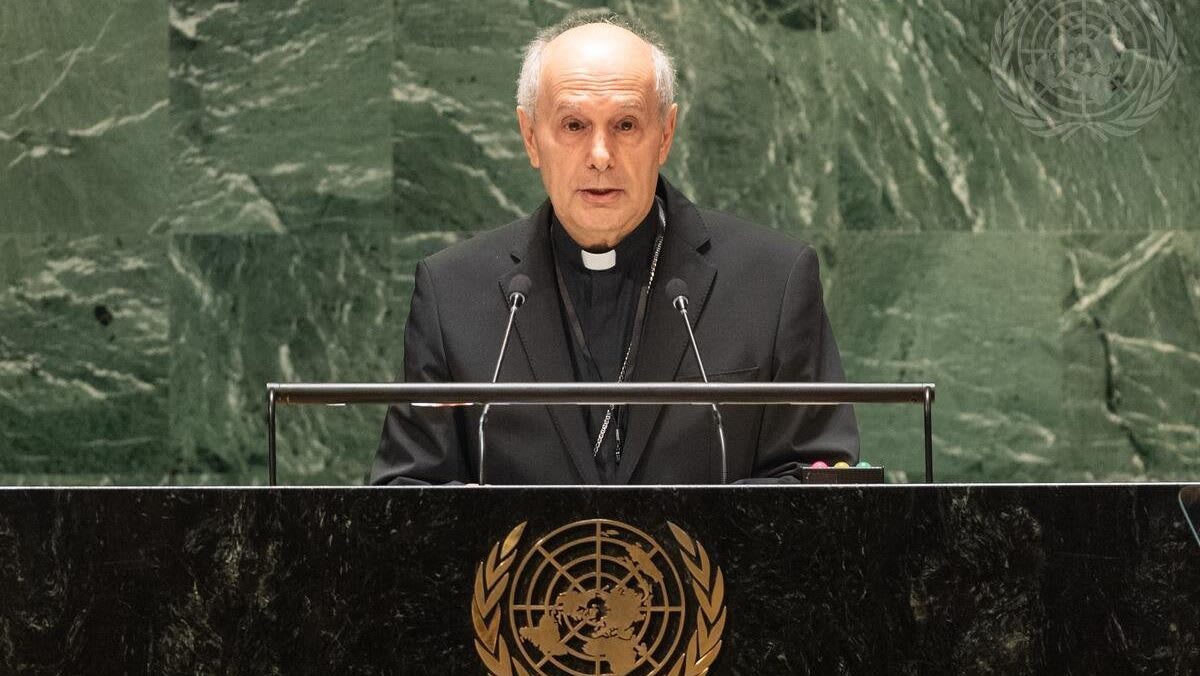
Pope Leo has appointed Archbishop Gabriele Caccia as the new apostolic nuncio to the United States, replacing Cardinal Christophe Pierre.
The appointment comes at a delicate moment in Vatican-U.S. relations, with tensions shaped by the war in Iran, immigration policy, and broader strains between Rome and parts of the American Church.
Caccia is a seasoned diplomat who has served at the United Nations and in several important Vatican assignments.
Why It Matters
This kind of story does not usually trend, but it matters enormously in 2026.
The nuncio is not just a ceremonial ambassador. He is a key channel between Rome and the U.S. Church, with influence on relationships, tone, and often the shape of episcopal culture.
These appointments can quietly determine whether the Church leans more toward conflict, caution, reform, diplomacy, or pastoral steadiness in the years ahead.
Reflection
Sometimes the most important church stories are the ones that look boring at first glance.
Bureaucracy is not entertaining, which is probably a mercy from God.
But institutions matter because people live inside the worlds institutions shape. The Church does not only speak through encyclicals and homilies. It also speaks through appointments, priorities, and the people entrusted with delicate relationships.
So while this story may not inspire dramatic comment sections, it is worth paying attention to.
Quiet decisions often become loud consequences later.
A New Tone in New York, and Why Tone Matters
What Happened
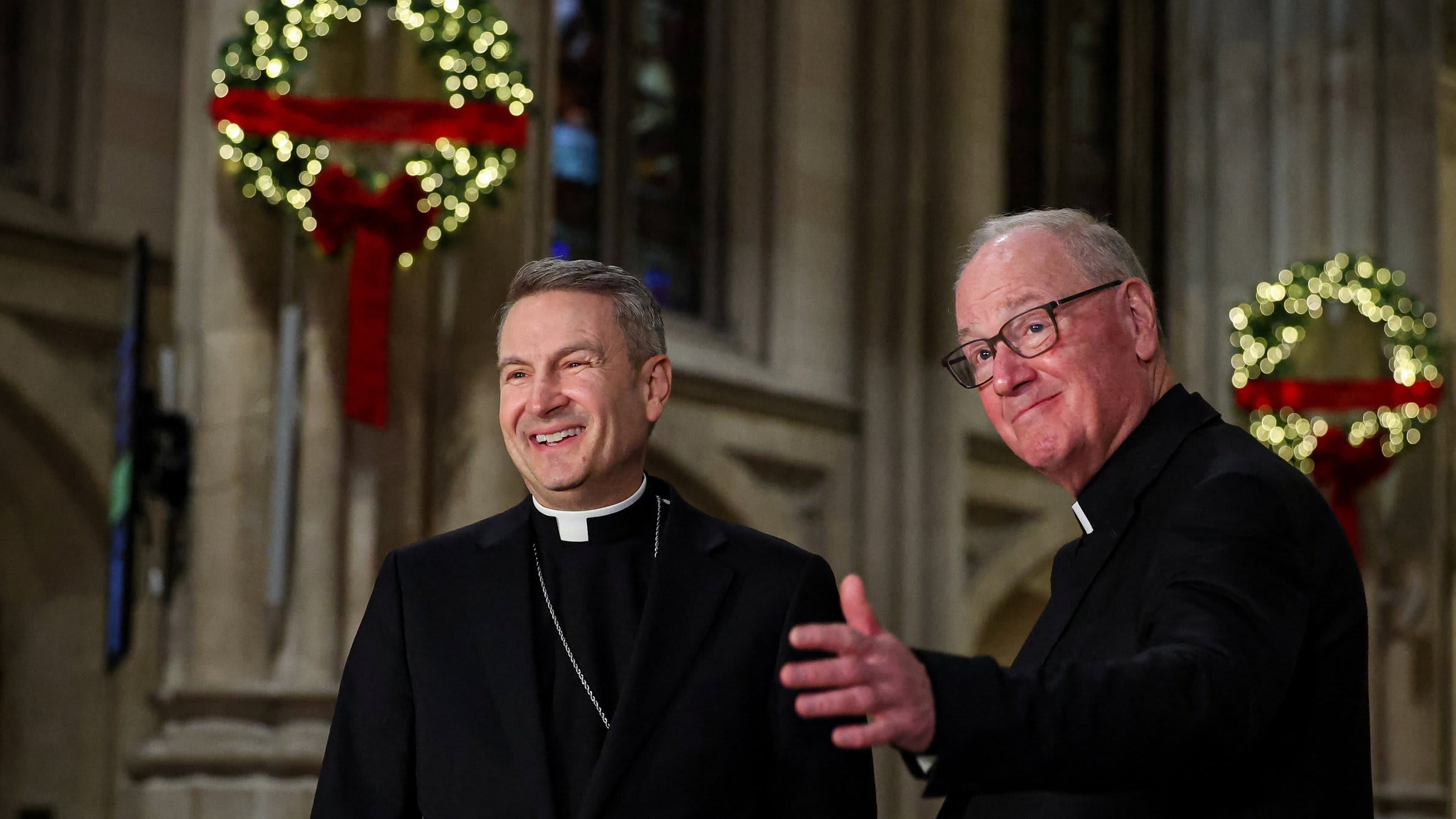
When Bishop Ronald Hicks became the new archbishop of New York, reporting described him as emphasizing unity, evangelization, respect for all, immigrant dignity, and concern for the vulnerable.
The coverage framed him as aligned with Pope Leo’s more reform-minded and socially attentive direction, and his installation marked the first leadership transition in the archdiocese in many years.
Why It Matters
Tone is not everything.
But tone is never nothing.
In public religious leadership, tone often reveals theology before theology is ever fully explained. A church that says it wants to show respect for all and build unity is making a claim about what kind of witness it believes is needed now.
In a time when many people associate Christianity with cruelty, contempt, or endless factional warfare, even a shift in tone can signal a deeper struggle over the soul of the Church.
Reflection
The Church in America does not need more performance of certainty.
It needs holiness, courage, and credibility.
It needs leaders who understand that “respect for all” is not code for moral vagueness. It is the starting point for Christian witness, because every person we meet is someone for whom Christ gave his life.
That does not solve every conflict, and it certainly does not erase real disagreements.
But it does change the spirit in which those disagreements are carried.
Frankly, we could use a little less thunder and a little more Gospel.
Closing Reflection
Taken together, these stories reveal a Church still wrestling with what kind of public witness it wants to offer.
Will it stand beside migrants when that becomes politically inconvenient?
Will it question the morality of war when nationalism wants applause instead?
Will it choose leaders and tones that build trust, or keep feeding the cycle of noise and suspicion?
Will it boldly proclaim “Todos Todos Todos” – All are welcome in this place.
For my part, I am more encouraged than ever.
There are still clergy, bishops, and faith communities willing to risk their own position and even safety for clarity. There are still people trying to put mercy, justice, and human dignity back at the center of the conversation. There are people throughout the church who I look at and can say “This person is radiating Christ.”
That is deeply important.
It is important spiritually, and it matters socially, because compassion is not weakness and moral seriousness is not naïveté.
Pay attention this week, not only to what happened, but to what the stories reveal.
Watch for where faith is being used as cover for power, and where faith is being lived as courage in public.
And as always, I would love to hear what stands out to you most.
Which of these stories feels most important to you right now, and why?
A Prayer for the World
Let us pray.
God of all nations and peoples,
God who sees every human life with tenderness,
We bring before you the world we are living in today.
A world filled with noise, conflict, fear, and uncertainty.
A world where power often speaks louder than compassion.
Give wisdom to those who lead nations.
Give courage to those who speak for justice.
Give patience and mercy to those who work quietly for peace.
Be close to migrants searching for safety.
Be close to families caught in the violence of war.
Be close to those who feel forgotten, displaced, or unseen.
And for those of us watching the headlines from afar,
teach us not to grow cynical,
not to grow numb,
and not to lose sight of the sacred dignity of every human life.
Renew in your Church a spirit of humility, courage, and compassion,
so that faith may never become a weapon of power,
but always remain a light for the wounded and the weary.
Send your peace into this restless world,
and plant within us the quiet determination
to live as people of mercy and reconciliation.
We ask this in the spirit of Christ,
who calls us to love our neighbor and seek the peace of the world.
Amen.