


It is not every day that a pop star gives the world a moral reminder.
And yet here we are.
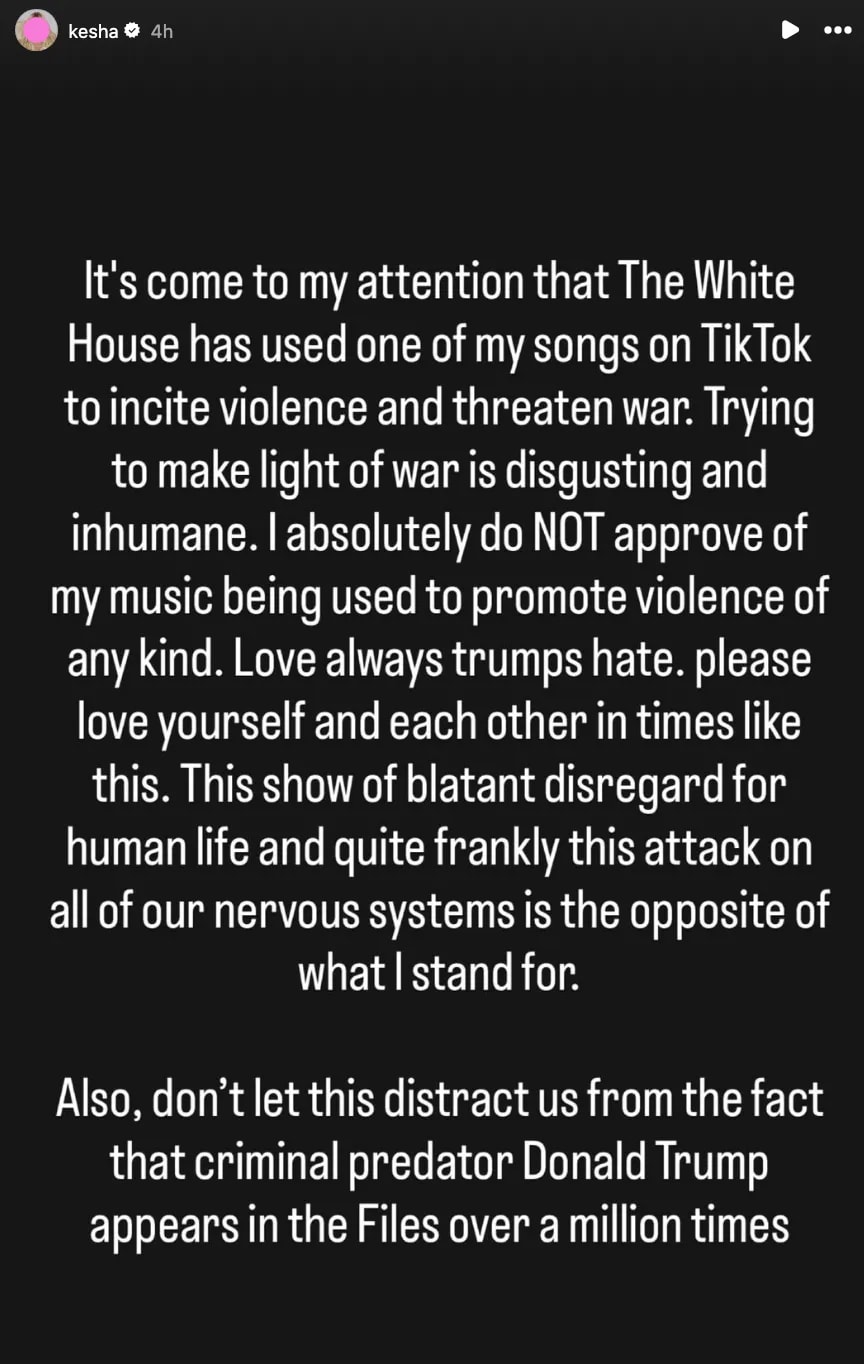
Kesha, of all people, publicly objected to her song being used in a political setting that, in her view, incited violence and flirted with the language of war. Strip away the headlines, the celebrity, the partisan commentary, and you are left with something surprisingly serious: a human being saying, “Do not use my art to celebrate the possibility of bloodshed.”
That should make us pause.
Because we are living in an age when everything becomes content. War becomes branding. Conflict becomes a soundtrack. Even the possibility of human lives being taken can be wrapped in irony, applause, or a catchy hook.
And Christians cannot allow themselves to be formed by that spirit.
When the course of human events leads nations toward the taking of life, we approach it with trembling. We do not make jokes. We do not delight. We do not treat it as theater.
If force is ever used, it is used with the utmost seriousness. Anything less is a spiritual failure.
Jesus is uncomfortably clear: “Love your enemies and pray for those who persecute you” (Matthew 5:44, NIV).
He does not say this to sentimental people. He says it to people living under occupation. To people who knew violence firsthand. To people who had very real enemies.
The Christian tradition has never been naïve about the world. Augustine, wrestling with the reality of political power, articulated what would become the just war tradition. But Augustine did not romanticize violence. He insisted that even when force is tragically necessary, it must be marked by sorrow, restraint, and love for the very people against whom it is directed.
Let that sink in.
Love for the enemy does not evaporate when politics heats up.
The early Church understood this viscerally. They prayed for emperors who persecuted them. They refused to turn executions into entertainment. They did not clap when someone they disagreed with was crushed. They knew that every human being, however corrupt, bears the image of God.
That conviction is what keeps civilization from unraveling.
And if I am honest with you, I feel the pull of the opposite instinct all the time. There are days when outrage feels energizing. There are moments when a biting joke at the expense of “the other side” feels delicious. There is a subtle pleasure in imagining opponents getting what we think they deserve.
That pleasure is poison.
When I notice it in myself, I know I need to go back to the cross.
Because Christ does not mock his enemies from Golgotha. He does not weaponize humiliation. He says, “Father, forgive them” (Luke 23:34, NIV).
That is the measure.
When energizing music is used to inflame, when crowds roar at rhetoric that edges toward violence, when political leaders speak casually about force, Christians must be the adults in the room. We do not cheer destruction. We do not aestheticize war. We do not let our tribal loyalties override our baptism.
To love our enemy does not mean we abandon justice. It means we refuse dehumanization.
We can oppose policies. We can critique leaders. We can demand accountability. But we never delight in the prospect of bloodshed. We never treat human life as a prop in a rally.
If war ever comes, it is a tragedy. Not a vibe.
Gentle Practical Integration
If you want to live this in a noisy week, try this:
-
Examine your laughter.
When political content makes you laugh at someone’s humiliation or destruction, ask yourself why. Sit with that question. -
Pray specifically for restraint.
Pray that our leaders, on all sides, would exercise caution and sobriety when speaking about force. -
Refuse the dehumanizing meme.
For one week, do not share content that reduces opponents to caricatures, no matter how clever it feels. -
Intercede for the “enemy.”
Name before God a political figure or nation you distrust. Ask God to protect their people and to soften their leaders’ hearts.
These are small disciplines. But they reshape the interior life.
We are not citizens of a spectacle-driven kingdom. We belong to the Crucified One.
If this reflection steadied you, share it with someone who feels exhausted by the noise. And if you are wrestling with how to love your enemies in this political climate, I would value hearing your thoughts in the comments. We are learning this together.
If this reflection strengthened you, consider becoming a supporting member so we can continue walking together.
Closing Prayer
Lord Jesus Christ,
You walked into a world intoxicated by power and spectacle, and you refused to be shaped by it. You knew violence was real, and yet you would not let hatred define you. You loved your enemies even as they nailed you to the cross.
We confess how easily we are swept up in outrage. We admit that sometimes we have enjoyed harsh words, sharp jokes, and even the thought of our opponents’ downfall. We have treated serious things lightly.
Guard our hearts from cruelty. Teach us the gravity of human life. If force is ever used in this world, let it be approached with sorrow and restraint, never with delight. Give our leaders wisdom. Protect the innocent. Turn away reckless speech that incites harm.
Make us people who hold truth firmly and love stubbornly. Keep us anchored in your mercy when the world tempts us with spectacle.
Shape us into citizens of your Kingdom.
Amen.
We’re walking through noisy days together. How are you holding up? Tell me in the comments so we can pray for one another.