

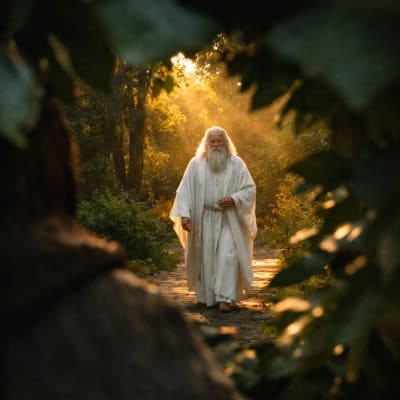
A Word to Those in the Path of the Blizzard
To all who are being impacted by the winter storm moving across the Northeast, please take this seriously and take care of yourselves.
Blizzards are not just inconveniences. They are powerful systems that can disrupt travel, strain power grids, and put vulnerable neighbors at risk. Stay home if you can. Listen to local authorities. Check on elderly relatives, neighbors, and anyone living alone.
If you are anxious, you are not alone. Storms have a way of stirring deeper unease in all of us. But remember this: we endure these things together. Communities show their strength in moments like this.
If you need anything and I can help, email me… just reply to this email and I’ll receive it. If you’re able to, consider making a contribution to organizations that help, many people will be deeply impacted. And don’t forget to remember the homeless in your prayers.
May you be warm.
May you be safe.
May your homes be secure.
And may we look out for one another with quiet courage.
Stay safe.
~Fr. Rich
Opening
Have you ever met someone who just seems completely delusional?
Struggles rebranded as astonishing success. Chaos narrated as destiny. Obvious dysfunction marketed as vision.
Or maybe the opposite. Someone who appears successful by every outward measure and yet lives in quiet despair.
A friend meets a new significant other and within days they are speaking about forever. Another remains in a relationship that is clearly eroding their spirit, but insists it is the greatest love story ever told.
The person who is rude to the waiter and then posts about generosity on social media an hour later.
A person who claims faith, but their heart is filled with hate and anger.
We see it in others almost instantly. The gap between reality and narrative. The distance between who someone is and who they insist they are.
What is harder, of course, is seeing that same gap in ourselves.
That is why the question matters.
“Where are you?”
It is the question God asks Adam after the fruit incident in the book of Genesis. “The Lord God called to the man and said to him, ‘Where are you?’”
Genesis 3:6–10
6 When the woman saw that the fruit of the tree was good for food and pleasing to the eye, and also desirable for gaining wisdom, she took some and ate it. She also gave some to her husband, who was with her, and he ate it. 7 Then the eyes of both of them were opened, and they realized they were naked; so they sewed fig leaves together and made coverings for themselves.
8 Then the man and his wife heard the sound of the Lord God as he was walking in the garden in the cool of the day, and they hid from the Lord God among the trees of the garden. 9 But the Lord God called to the man, “Where are you?”
10 He answered, “I heard you in the garden, and I was afraid because I was naked; so I hid.”
Not, “What did you do?”
Not, “How could you?”
Not even, “Are you ashamed enough yet?”
Where are you?
God is not asking for information. He is inviting honesty.
Reflection
Adam answers, “I heard you in the garden, and I was afraid… so I hid.”
Fear. Hiding.
The first human response after sin is not confession, but concealment.
And we are not so different.
We curate our lives. We soften our failures. We exaggerate our strengths. We construct narratives that make us feel coherent, justified, intact. We are all subject to our own perceptions and to our desire to be perceived well.
But hiding who we really are damages us.
It damages our relationship with ourselves, because we begin to believe the edited version.
It damages our relationships with one another, because intimacy requires truth.
And it damages our relationship with God, because grace works in reality, not in illusion.
If you talk to people long enough, you realize something quickly: we all have problems. Every last one of us. Anxiety. Pride. Insecurity. Compulsions. Wounds. Blind spots. There is no spiritually superior class of human beings.
The difference is not whether we struggle.
The difference is whether we are willing to locate ourselves honestly.
But why risk it?
Why ask the question at all? Why potentially wound our pride?
Because illusion is exhausting.
Maintaining a false narrative requires constant effort. You must defend it. Explain it. Protect it. Compare yourself to others to keep it intact. That kind of vigilance drains the soul. There is a strange freedom in accuracy. When you stop managing perception and simply tell the truth about where you are, something inside you can finally exhale.
Because you cannot heal what you will not name.
God’s question in the garden is not a trap. It is the first movement of mercy. Healing begins with clarity. The surgeon cannot operate on a wound you insist does not exist. Saint Augustine did not become a saint because he was flawless, but because he became honest. He allowed grace to meet him in truth, not in pretense.
And because hiding is slowly shrinking us.
When we refuse to examine ourselves, we drift. Into resentment. Into complacency. Into moral certainty about everyone else. Drift feels harmless, but it narrows the soul. Pride feels strong, but it is brittle. Truth, even humbling truth, enlarges us.
I have had seasons in my own life when I was busy, productive, publicly faithful… and inwardly unexamined. I could speak well about spiritual things and still avoid the quieter question of alignment. It is humbling to admit that. But faith that cannot withstand humility will not withstand much at all.
Examination is not humiliation. It is alignment.
To answer “Where are you?” honestly is not to condemn yourself. It is to stand in the light and say, “Lord, this is where I am.” That is where grace begins its work.
Gentle Practical Integration
If you are willing, here are a few small ways to begin this week:
-
Notice the Gap
Pay attention to where your outward presentation and inward reality diverge. Do not judge it. Just notice. -
Name One Attachment
What has captured your emotional energy lately? A grievance, a fear, a need for approval, a quiet resentment? Write it down privately. -
Practice Daily Location
At the end of each day, ask gently: Where did I feel aligned? Where did I feel off center? Offer both to God without drama. -
Invite One Honest Conversation
Ask a trusted friend, family member, therapist, or spiritual director, “Is there something about me I might not be seeing clearly?” Listen without rushing to defend.
These are small acts of courage. They are how we step out of the bushes.
Closing
We are not meant to navigate this alone.
What line from this reflection stayed with you?
If this reflection helped you pause and locate yourself more honestly, consider sharing it with someone who might need the same invitation. And if this work strengthens you, becoming a supporting member allows us to continue building a steady, thoughtful community together.
Closing Prayer
Lord God,
You who called out in the garden and still call out now,
you who see us more clearly than we see ourselves,
grant us the courage to answer you truthfully.
We confess that we prefer curated versions of our lives. We hide behind busyness, certainty, comparison, and noise. We protect our pride even when it keeps us small.
Give us the grace to stand where we truly are.
Where we are afraid, steady us.
Where we are defensive, soften us.
Where we are drifting, anchor us.
Protect us from shame that paralyzes and from pride that blinds. Teach us that honest self-examination is not self-condemnation, but the doorway to freedom. Let your mercy meet us in truth, not in illusion.
Call us out of hiding. Lead us into the light. And make us whole in Christ.
Amen.